
In modern construction and interior design, product innovation continues to create more efficient and environmentally responsible building solutions. One such development is the increased use of calcium sulphate panels in raised access flooring systems.
In addition to their structural performance, calcium sulphate panels can offer environmental, acoustic, fire-performance, and design advantages that distinguish them from many conventional raised-floor products.
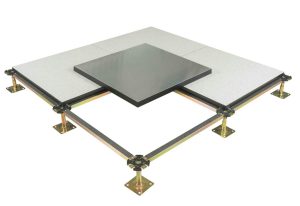
Understanding Calcium Sulphate Raised Floor Panels
Raised access flooring has long been used in commercial buildings to provide an accessible space for cables, wiring, electrical services, mechanical systems, and other infrastructure. Traditional access-floor panels are commonly manufactured from steel, concrete-filled steel, aluminum, or high-density wood core.
Calcium sulphate panels provide another option. These panels generally consist of a dense gypsum-based core and may be supplied as bare panels or combined with steel coverings, edge treatments, and factory-applied finishes.
The panels are supported by adjustable pedestals and, depending on the selected system, may also use stringers for additional lateral stability and structural support.
A More Sustainable Raised Flooring Option
One of the primary advantages of calcium sulphate access flooring is its potential environmental performance. Gypsum is an abundant mineral, and some panel products incorporate recycled or recovered materials into their manufacturing processes.
The actual recycled content and environmental impact vary by manufacturer and product. Architects and specifiers should review the manufacturer’s technical documentation, environmental product declarations, and material disclosures when evaluating a system for sustainability objectives.
Resource Conservation
Using recycled content can reduce demand for virgin raw materials. The modular nature of raised access flooring can also support resource conservation because individual panels may be removed, reused, or replaced without demolishing the entire floor.
Long Service Life
Calcium sulphate panels are designed for demanding commercial applications. When properly specified, installed, and maintained, their durability can provide a long service life and reduce the need for frequent replacement.
Recycling and End-of-Life Considerations
Calcium sulphate panels may offer recycling opportunities at the end of their useful life. Depending on the panel composition, applied finishes, local recycling facilities, and manufacturer programs, gypsum-based materials may be processed and reused rather than disposed of as general construction waste.
Recycling should not be assumed for every product or location. Before selecting a system based on end-of-life sustainability, verify:
- The panel’s material composition and recycled content
- Whether coverings and edge materials can be separated
- Available manufacturer take-back programs
- Local construction-material recycling capabilities
- Transportation requirements and associated environmental impacts
Manufacturing and Energy Considerations
The environmental impact of a raised-floor panel depends on raw-material extraction, manufacturing energy, transportation, service life, and end-of-life handling.
Some calcium sulphate panels may require less energy-intensive processing than certain conventional alternatives, but performance varies between manufacturers and manufacturing facilities. Product-specific environmental documentation provides the most reliable basis for comparing embodied energy and carbon impacts.
Selecting a durable system that can remain in service through multiple workspace changes can also reduce the environmental impact associated with renovations and replacement materials.
Indoor Air Quality
Commercial interior materials can affect indoor air quality through emissions of volatile organic compounds, commonly known as VOCs.
The gypsum-based core of a calcium sulphate panel may have low emissions, but the complete assembly must be considered. Adhesives, floor coverings, edge treatments, coatings, and other components can influence the finished product’s emissions.
For projects with indoor-air-quality requirements, request product-specific emissions testing and documentation for the complete panel and floor-covering assembly.
Structural Strength and Load Performance
Calcium sulphate raised floor panels are manufactured in different thicknesses, densities, dimensions, and load classifications. Depending on the selected product and understructure, they can support applications ranging from general offices to technical rooms and data centers.
Important performance criteria include:
- Concentrated-load capacity
- Uniform-load capacity
- Rolling-load performance
- Ultimate-load and safety-factor requirements
- Panel deflection under load
- Pedestal and stringer capacity
The complete raised-floor system—not only the individual panel—must be evaluated against the expected equipment loads and project specifications.
Fire-Performance Advantages
The mineral composition of calcium sulphate can provide favorable fire-performance characteristics. This makes the panels attractive for projects where combustibility and fire resistance are important design considerations.
Fire ratings and test results vary by manufacturer, panel construction, floor covering, understructure, and complete assembly. Always verify the proposed system’s testing and compliance with the project’s fire-performance requirements.
Acoustic Performance
The density of calcium sulphate panels can provide useful acoustic properties. Their mass may help reduce airborne and impact-sound transmission in offices, conference rooms, educational spaces, and other occupied environments.
Acoustic performance depends on the entire floor assembly, including the panel, pedestal system, floor covering, underfloor barriers, and surrounding construction.
Workspace Flexibility and Adaptability
Like other modular access-floor products, calcium sulphate panels can be individually removed to reach underfloor services. This provides accessible pathways for electrical wiring, communications cabling, and other building infrastructure.
When workplace requirements change, services can be relocated beneath the floor without extensive demolition. This adaptability can reduce renovation time, construction waste, and disruption to building occupants.
Calcium sulphate panels are also available with various finishes, including carpet, resilient flooring, laminate, stone, and other architectural surfaces, depending on the product and manufacturer.
Finding a Calcium Sulphate Access Flooring Company
Calcium sulphate raised-floor systems are less common in the United States than concrete-filled steel panels, which have historically dominated the domestic commercial access-floor market. As a result, locating compatible products and an experienced supplier may require additional research.
When evaluating a supplier, confirm:
- The specific panel manufacturer and product series
- Available panel dimensions and finished-floor heights
- Panel and understructure load ratings
- Fire and acoustic test documentation
- Finish and edge-treatment options
- Material availability and replacement-panel support
- Installer experience with calcium sulphate systems
Pro Access Floors can assist with calcium sulphate access flooring systems, product selection, technical information, and installation requirements. Manufacturers such as Lindner Group also produce calcium sulphate raised-floor products for commercial applications.
The Future of Sustainable Raised Flooring
As architects, engineers, and building owners place greater emphasis on sustainable design, calcium sulphate panels offer a compelling combination of structural performance, flexibility, and potential environmental advantages.
Their recycled-content potential, durability, accessibility, fire performance, and compatibility with modular construction make them worth considering for offices, data centers, educational facilities, and other commercial buildings.
Conclusion
Calcium sulphate raised floor panels provide an alternative to traditional steel, concrete-filled, aluminum, and wood-core access-floor products. Their dense gypsum-based construction can deliver strong load performance, favorable fire and acoustic characteristics, and long-term adaptability.
Their environmental benefits depend on the specific manufacturer, panel composition, manufacturing process, transportation, and available recycling programs. Product-specific documentation should therefore be reviewed before making sustainability claims or selecting a system.
When properly specified and installed, calcium sulphate access flooring can support a flexible, durable, and more environmentally responsible commercial interior.