

Understructure for Raised Computer Floors
The strength and stability of raised computer floors begin below the panels. Understructure is the support assembly that elevates the floor above the building slab, holds the panels level and creates an accessible space for power, data cabling and, where designed, underfloor air distribution.
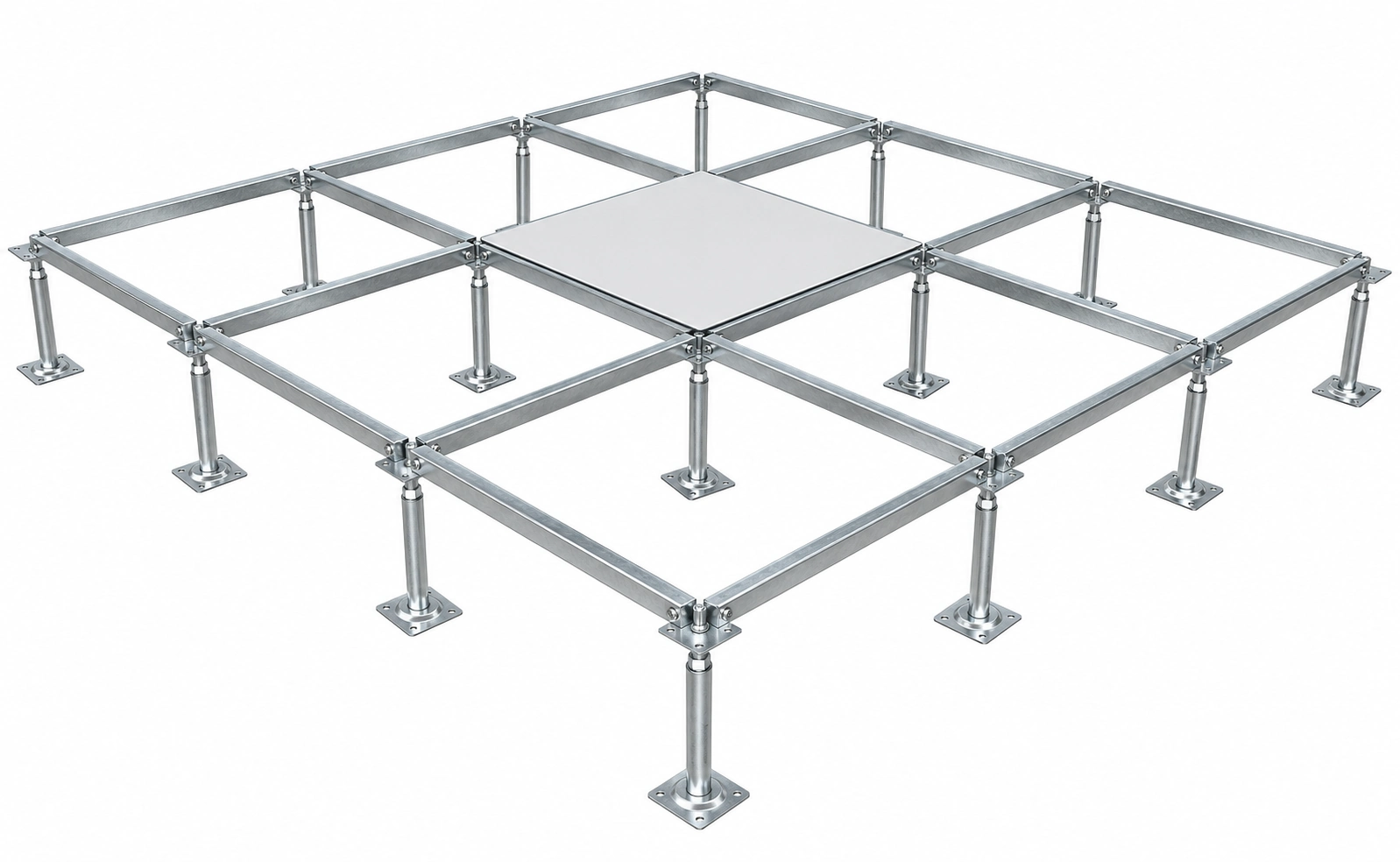
A typical assembly includes pedestal bases, adjustable stems and pedestal heads. Depending on the system, horizontal stringers connect the pedestals, or panel corners fasten directly to the pedestal heads. The panels and understructure work together as a complete floor system.
Pro Access Floors offers new and pre-owned understructure for concrete-filled, hollow steel, wood core and aluminum raised computer floors.
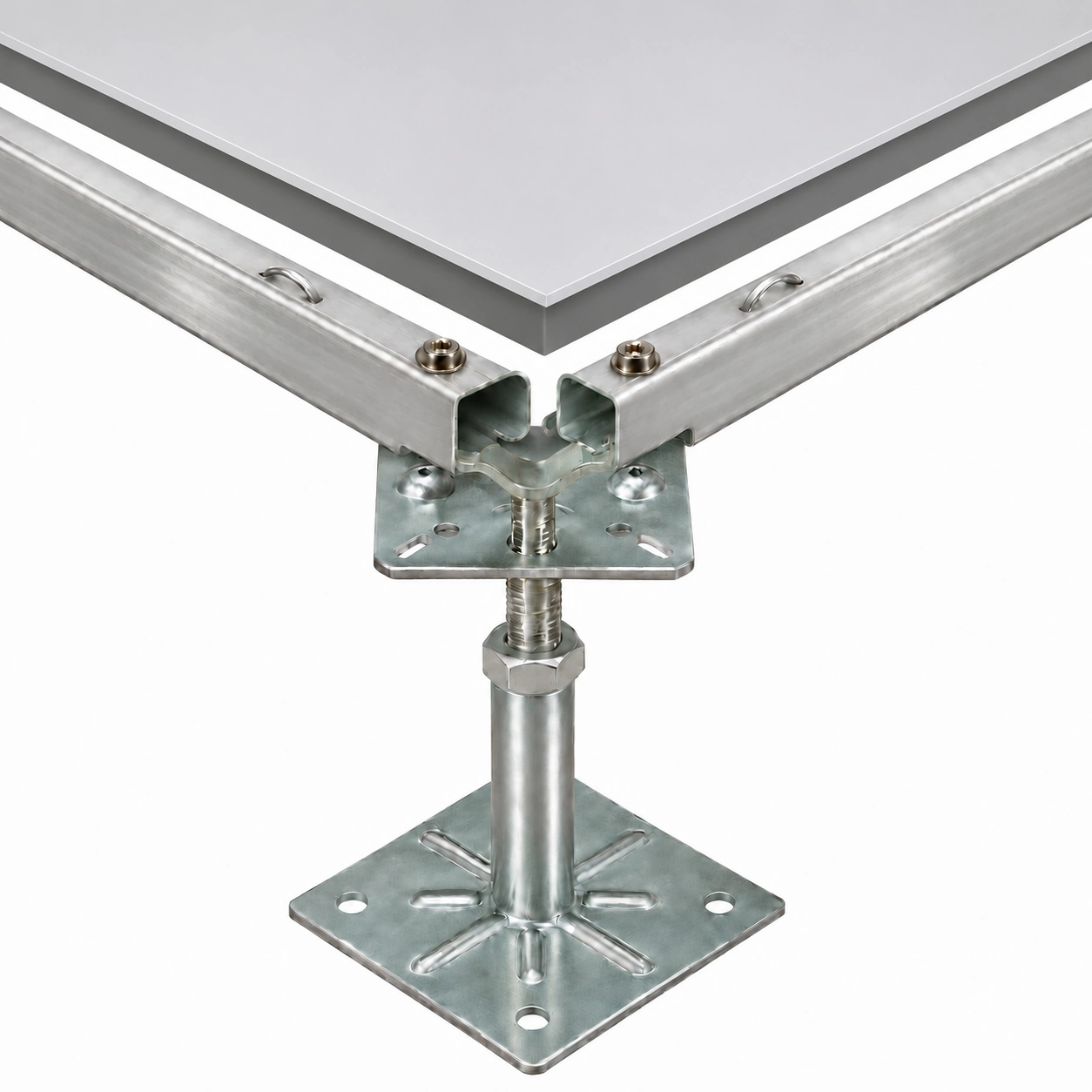
Bolted Stringer System
A bolted stringer system connects adjacent pedestal heads with horizontal members that are secured with bolts. These stringers form a supporting grid beneath the floor panels and help maintain alignment and lateral stability.
This arrangement is commonly specified for raised computer floors in data centers, server rooms and other applications where equipment movement, rolling loads or project requirements call for a stringer-supported assembly. The appropriate stringer depth and pedestal design depend on the selected panel and required system performance.
Supporting Equipment and Maintaining Access
In many bolted stringer systems, individual panels lift out to provide access to cables and services while the supporting grid remains in place. Some assemblies also use panel corner fasteners. The exact arrangement depends on the floor model.
Finished floor height, loading and seismic requirements must be confirmed for the specific assembly. Taller installations or particular site conditions may require additional anchorage or bracing; bolted stringers alone do not establish a seismic rating.
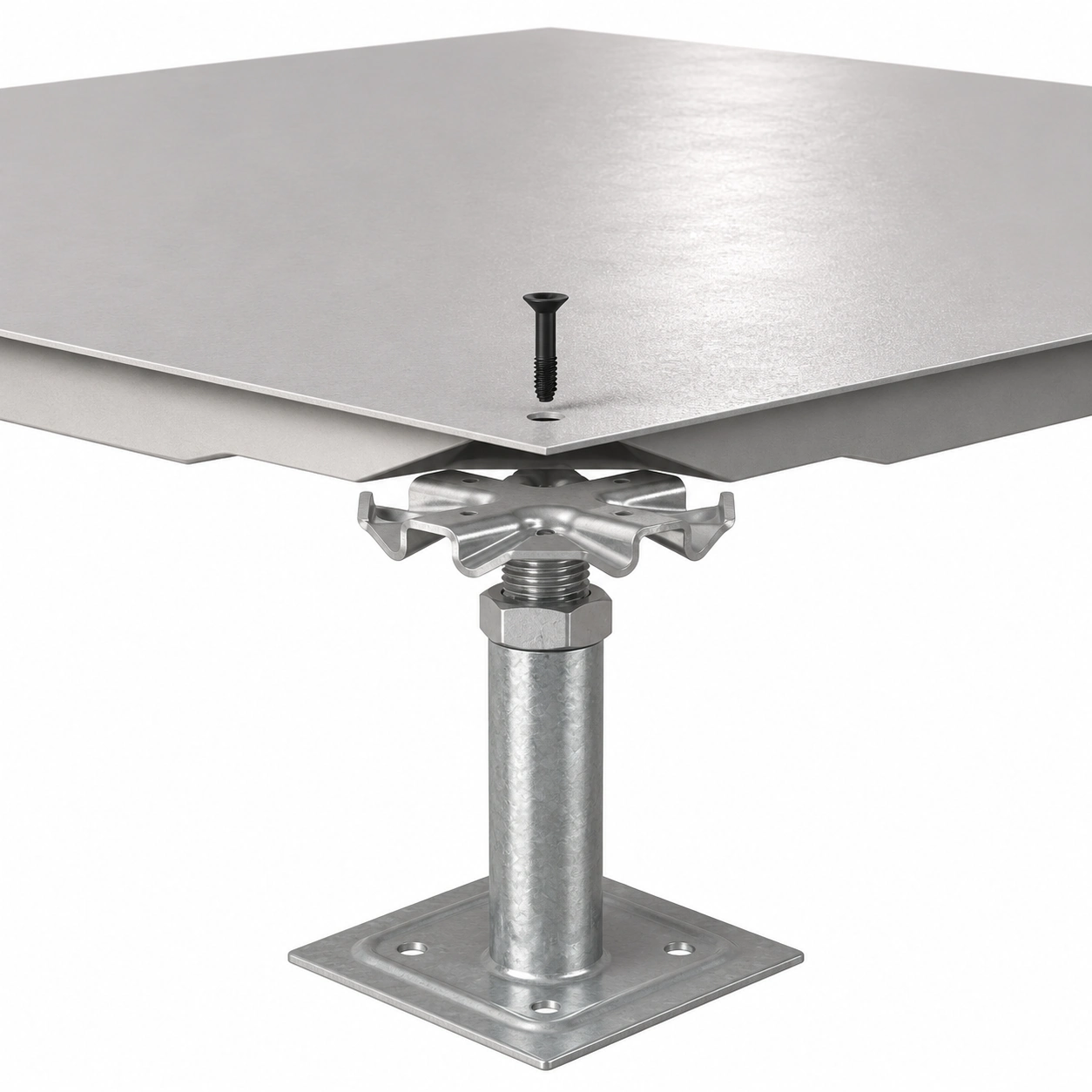
Stringerless Corner-Lock System
A stringerless corner-lock system supports the panel corners on pedestal heads without horizontal stringers between them. Fasteners secure the panel corners directly to the heads, helping keep the panels positioned and the floor assembly stable.
This type of understructure can be suitable for offices, control rooms and smaller computer rooms when the selected system meets the project's height and loading requirements. Suitability depends on the tested assembly, rather than room size alone.
Direct Connections and an Open Underfloor Space
Removing the horizontal stringers leaves fewer members between pedestals for routing services. Panel corner fasteners must be released before the panels are lifted for access, then reinstalled according to the manufacturer's instructions.
Corner-lock heads and fasteners must match the panel design. A stringerless system should not be created simply by removing stringers from an existing floor unless the manufacturer has approved that configuration.
Why Understructure Varies Between Systems
Understructure is typically designed for a particular manufacturer's panel family and connection method. Pedestal head shape, panel corner details, stringer profile, fasteners and adjustment range can differ from one system to another. Two panels with the same nominal dimensions do not necessarily use interchangeable supports.
When replacing parts or expanding an existing floor, match the panel model, support connections and finished floor height. Load performance must be checked for the complete panel-and-understructure assembly, along with any required anchorage or bracing. Photos of the panel underside, pedestal head and stringer connections help identify compatible components.
Questions About Under-Structure Options?
Need additional under-structure for a project? We can help identify compatible pedestals, stringers and components for your raised computer floors, with new and pre-owned options available.
Contact Us About Under-Structure