
In modern architecture and technology, one important building component is often hidden from view: the raised access floor. Despite its unobtrusive appearance, raised flooring has changed how commercial buildings accommodate electrical wiring, data cabling, cooling systems, and evolving technology.
Tate has played an important role in the development and continued advancement of raised access flooring. Its products are used in data centers, offices, command centers, computer rooms, and other technology-dependent facilities.
This article explores the development, applications, and advantages of Tate raised access flooring systems.
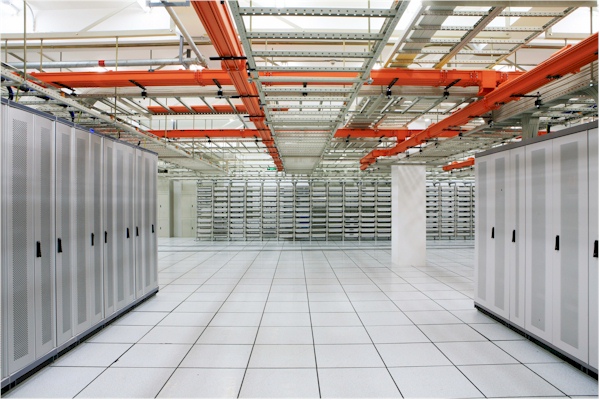
The Emergence of Raised Access Flooring
As computer systems and electronic equipment became increasingly important to commercial operations, building designers faced a new infrastructure challenge. Computer rooms required extensive power and data cabling while also generating heat that had to be managed effectively.
Traditional building designs offered limited space for these services and made future changes difficult. Raised access flooring provided a practical solution by elevating the finished floor above the structural slab.
The resulting underfloor space could accommodate:
- Electrical wiring and power distribution
- Data and communications cabling
- Cooling-air distribution
- Building controls and other utilities
- Future infrastructure changes and expansions
The concept gained acceptance in computer rooms and data centers before expanding into offices, command centers, educational facilities, libraries, casinos, and other commercial environments.
The Development of Tate Access Floors
Tate developed into a major manufacturer of raised access flooring and related infrastructure products. The company focused on creating modular flooring systems capable of supporting changing technology and increasingly demanding commercial applications.
Over time, Tate’s product offerings expanded to include raised-floor panels, pedestals, stringers, airflow products, containment solutions, and systems designed to support underfloor service distribution.
Its continued product development helped make raised flooring an important part of modern data center and commercial-building infrastructure.
Tate ConCore Raised Floor Panels
One of Tate’s best-known product families is the ConCore raised-floor panel. ConCore panels use a welded steel shell filled with a lightweight cementitious material, combining structural strength with the modular accessibility of a removable floor panel.
ConCore panels are available in different performance classifications for offices, equipment rooms, data centers, and other applications. Depending on the selected model, the panels may accommodate different concentrated, uniform, rolling, and ultimate-load requirements.
The panels can be supplied bare for use with field-applied carpet tile or with factory-applied finishes for specific applications.
When selecting a ConCore panel, verify:
- The exact panel model and dimensions
- Required concentrated and rolling-load performance
- Understructure type and finished-floor height
- Panel finish and edge configuration
- Compatibility with existing flooring
- Project-specific fire and electrical requirements
Underfloor Air Distribution
Tate has also contributed to the development of underfloor service distribution and underfloor air-distribution applications.
In an underfloor air-distribution system, the space beneath the raised floor can function as a supply-air plenum. Conditioned air is delivered into the occupied space through floor diffusers, perforated panels, or airflow grates.
When properly designed, underfloor distribution can provide:
- More direct delivery of conditioned air
- Improved flexibility when workspace layouts change
- Accessible pathways for power and communications services
- Individual or zoned airflow-control options
- Potential improvements in cooling and energy performance
Actual performance depends on the complete mechanical design, building controls, floor-plenum conditions, diffuser placement, and ongoing system maintenance.
Tate’s Impact on Commercial Buildings and Data Centers
Raised access flooring has become an important infrastructure component in technology-intensive facilities. Tate systems have been used in commercial offices, data centers, command centers, control rooms, educational facilities, and other buildings that require accessible underfloor services.
The modular nature of the flooring allows building owners to reach cables and utilities without demolishing permanent floor construction. This accessibility can simplify maintenance and make future technology changes less disruptive.
In data centers, raised flooring can also support airflow management through perforated panels, grates, containment products, and other accessories coordinated with server-rack cooling requirements.
Advantages of Tate Raised Access Flooring
Flexibility and Adaptability
Tate’s modular flooring systems allow individual panels to be removed for access to the underfloor space. Power, data, and communications services can be relocated as equipment and workspace requirements change.
This adaptability can reduce the demolition, construction waste, and operational disruption associated with conventional infrastructure changes.
Cable Management
The underfloor space provides an organized pathway for power and data cables. Keeping these services below the finished floor reduces visible clutter and makes cables more accessible for maintenance, upgrades, and reconfiguration.
Cable cutouts, grommets, service boxes, and other accessories can be incorporated into the panels to deliver utilities where needed.
Airflow Management
Perforated panels and airflow grates can distribute conditioned air from an underfloor plenum to designated areas. In data centers, airflow products can be positioned near server racks to support equipment-cooling requirements.
Effective performance requires proper airflow-panel selection, placement, underfloor pressure, cable management, and sealing of unnecessary openings.
Structural Performance
Tate offers panel and understructure options for different load requirements. Appropriate products can be selected for ordinary office furniture, rolling equipment, server cabinets, technical equipment, and other concentrated loads.
The complete system—including the panels, pedestals, stringers, equipment supports, and structural slab—must be evaluated for the anticipated loads.
Clean Appearance
Raised flooring conceals cables and other building infrastructure, creating a cleaner and less cluttered workspace. Panels may accept carpet tile, resilient flooring, high-pressure laminate, and other finishes depending on the selected product.
Long-Term Serviceability
Because raised floor panels are removable, damaged components can often be replaced individually. Building services remain accessible, and modifications can be completed without removing the entire floor.
Sustainability
Modular raised flooring can support sustainable-building objectives by facilitating reuse, reducing renovation waste, and extending the useful life of the building’s infrastructure.
Environmental characteristics vary by product. Review current manufacturer documentation for recycled content, material disclosures, environmental product declarations, and other project-specific sustainability information.
Used and Refurbished Tate Raised Flooring
Corporate relocations, facility closures, renovations, downsizing, and equipment changes have created a substantial market for used Tate raised-floor panels and understructure.
Used Tate raised flooring can offer meaningful savings for businesses operating within limited budgets. Reclaimed products may also help extend the service life of existing systems that are no longer supported with readily available new panels.
However, Tate has manufactured numerous panel designs and systems over the years. Older panels are not necessarily interchangeable with current products, even when both panels measure approximately 24 by 24 inches.
Compatibility may depend on:
- Exact panel dimensions and thickness
- Corner and edge configuration
- Panel underside construction
- Pedestal-head design
- Stringer configuration
- Panel load rating and finish
Refurbished Tate raised-floor panels can provide a practical solution when compatible new products are unavailable. Existing panels should be positively identified before ordering replacements.
Identifying Replacement Tate Floor Panels
To identify an existing Tate panel, provide clear photographs and measurements that show:
- The top surface and applied floor finish
- The complete underside of the panel
- Manufacturer stamps, labels, or markings
- The panel edges and corner details
- Exact length, width, and thickness
- The pedestal head and stringer connection
- Any cable cutouts or unusual modifications
Whenever possible, remove one panel and photograph it beside a tape measure. Accurate identification reduces the risk of purchasing panels that do not fit or perform correctly.
The Future of Tate Raised Access Floors
Commercial buildings and data centers continue to require flexible infrastructure, reliable equipment support, and efficient airflow management. Raised access flooring remains relevant because it allows facilities to adapt as technology and workspace requirements change.
Future developments will likely continue to focus on data center cooling, airflow controls, structural performance, modular service distribution, material efficiency, and integration with intelligent building systems.
Conclusion
Tate raised access flooring has played an important role in the development of flexible commercial and technical environments. Its flooring systems provide accessible pathways for cables and building services while supporting equipment loads, airflow management, and future facility changes.
New, used, and refurbished Tate products can each provide valuable solutions when properly selected for the application. Because compatibility and performance vary among panel models and generations, product identification and technical review are essential.
With appropriate system selection, installation, and maintenance, Tate raised flooring can provide a durable and adaptable infrastructure platform for offices, data centers, command centers, and other technology-dependent facilities.
Tate, ConCore, and associated product names, logos, trademarks, and copyrights are the property of Tate, Inc. This article is provided for general informational purposes.