
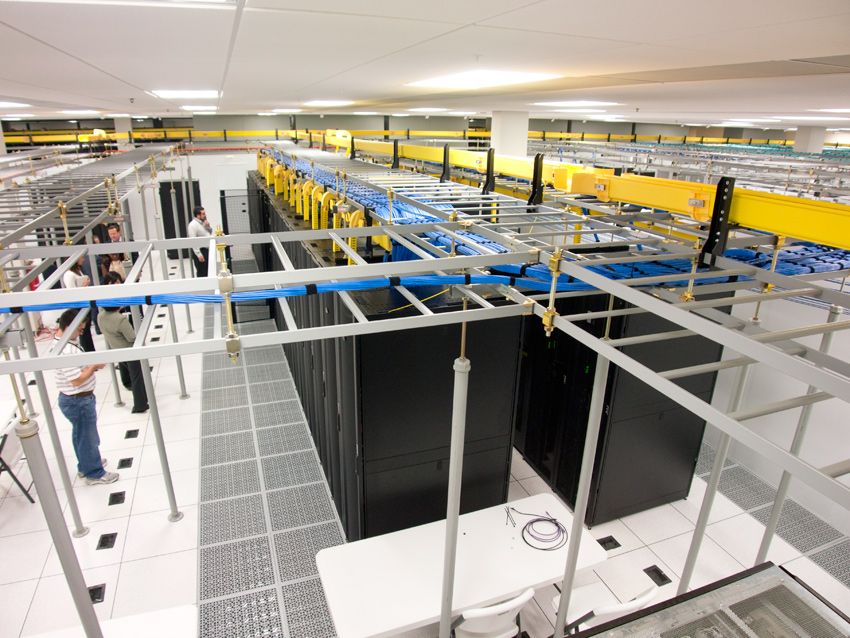
In today’s fast-paced business environment, efficiently cooling data centers and server rooms has become increasingly important. As demand for computing power grows, the heat generated by servers can cause performance problems, equipment damage, and higher energy costs.
To address these challenges, data center managers use raised computer floors as an effective solution for cooling optimization. Raised floor systems and perforated airflow panels can improve cooling efficiency, strengthen airflow management, and support more reliable data center operations.
Understanding the Data Center Cooling Challenge
Data centers are the backbone of modern businesses, storing and processing substantial amounts of critical information. The computing power required to perform these operations generates significant heat and creates demanding cooling requirements.
When servers and other IT equipment overheat, their performance can decline, potentially resulting in downtime and reduced productivity. Excessive heat can also shorten the service life of sensitive equipment and increase energy consumption because of the additional cooling required.
Data center managers have traditionally relied on cooling equipment such as computer room air-conditioning systems and precision air-conditioning units. However, cooling equipment cannot operate efficiently without properly managing and delivering conditioned air to the server racks.
The Role of Raised Access Flooring in Cooling Efficiency
A computer room raised floor system—also known as raised access flooring or a false floor—creates an elevated platform above the building’s structural floor. The open space between the two floors forms an accessible underfloor plenum that can distribute conditioned air throughout the data center.
Enhanced Airflow Management
The plenum beneath the raised computer floor provides a dedicated pathway for cooling-air distribution. Conditioned air enters the plenum and is released through perforated tiles or airflow panels positioned near the server racks.
This controlled airflow helps deliver cooling where it is needed, reducing hot spots and helping servers maintain an appropriate operating temperature.
Hot-Aisle and Cold-Aisle Containment
Raised flooring supports hot-aisle and cold-aisle containment strategies. Separating hot exhaust air from conditioned supply air enables the cooling system to target heat loads more efficiently and maintain consistent operating temperatures.
Effective containment reduces the mixing of hot and cold air, limiting wasted cooling capacity and improving overall energy performance.
Flexibility and Scalability
A raised access flooring system makes it easier to reconfigure or expand a data center. As computing requirements evolve, floor panels can be removed and airflow components repositioned to accommodate additional server racks, cabling, and cooling equipment.
This adaptable infrastructure allows data center layouts to change without extensive demolition or major interruptions to surrounding operations.
Cable Management
In addition to its cooling advantages, raised computer flooring provides an organized pathway for power and data cables. Routing services beneath the floor reduces visible clutter, simplifies maintenance, and helps prevent airflow obstructions caused by poorly managed cabling.
Key Components of Computer Room Raised Floor Systems
Raised Floor Panels
The foundation of a raised access flooring system is its raised floor panels. Panels are available in steel, concrete-filled steel, aluminum, calcium sulphate, and composite wood-core constructions. Each option provides different load ratings, fire-performance characteristics, and static-control capabilities.
Perforated raised floor panels and airflow grates are especially important in cooling applications because they allow conditioned air to travel from the underfloor plenum into the data center’s occupied space.
Pedestals and Stringers
Raised floor panels rest on adjustable pedestals that create the elevated platform. Stringers may be installed between the pedestals to provide lateral stability and additional panel support.
Pedestal height determines the finished-floor height and available underfloor space. The proper height should account for airflow requirements, cables, piping, equipment loads, and access for future maintenance.
Perforated Tiles and Airflow Panels
Perforated raised floor tiles and airflow panels deliver conditioned air from the underfloor plenum to designated areas. Panel type, open area, damper position, and placement should be coordinated with rack locations and equipment cooling requirements.
Grommets and Air-Sealing Products
Open cable cutouts can allow conditioned air to escape into areas where it provides little cooling benefit. Brush grommets and other sealing products help limit this leakage while still allowing power and data cables to pass through the floor.
Sealing unnecessary openings helps maintain underfloor pressure and improves the amount of conditioned air delivered through designated airflow panels.
Blanking Panels
Blanking panels installed in unused server-rack spaces help prevent hot exhaust air from circulating back to equipment air intakes. Used with aisle containment and properly placed airflow panels, they support more predictable cooling performance.
Environmental Benefits and Cost Savings
Beyond cooling efficiency, raised access flooring systems can provide meaningful environmental and financial advantages. Improving airflow and reducing wasted cooling capacity can lower operating expenses while supporting sustainability goals.
Improved Energy Efficiency
Better airflow management and containment allow data center cooling equipment to operate more efficiently. Delivering conditioned air directly to the equipment can reduce the energy required to maintain acceptable operating temperatures.
Lower cooling demand can produce meaningful electricity savings and reduce the facility’s overall environmental impact.
Extended Equipment Service Life
Maintaining consistent operating temperatures reduces the risk of premature equipment failure caused by excessive heat. Effective cooling can extend the useful life of servers and other valuable IT assets, postponing costly replacements.
Lower Maintenance Costs
Computer room raised floors help organize power and data cables while keeping building services accessible. Cleaner, better-organized underfloor spaces can simplify maintenance, reduce service time, and improve equipment reliability.
Important Airflow Design Considerations
A raised floor does not automatically guarantee efficient cooling. The underfloor system must be properly designed, installed, and maintained to achieve the intended results.
- Coordinate airflow-panel placement with server-rack cooling requirements.
- Select perforated panels with the appropriate open area and load capacity.
- Seal unused cable openings and other sources of underfloor air leakage.
- Prevent abandoned cables from obstructing airflow beneath the floor.
- Maintain adequate plenum depth and underfloor pressure.
- Use airflow measurements and temperature monitoring to identify hot spots.
- Reevaluate the airflow layout whenever server racks or equipment loads change.
Conclusion
In today’s digital environment, businesses cannot overlook the importance of reliable data center cooling. A properly designed raised computer floor provides an effective way to distribute conditioned air, manage cables, reduce hot spots, and support the dependable operation of critical IT infrastructure.
Raised flooring also provides flexibility and scalability, allowing the facility to adapt as computing and cooling requirements change. When combined with airflow management, containment, and proper underfloor maintenance, the system can help reduce energy use and operating costs.
Using raised access flooring and perforated airflow panels is a practical step toward improving data center efficiency, equipment reliability, and long-term sustainability.